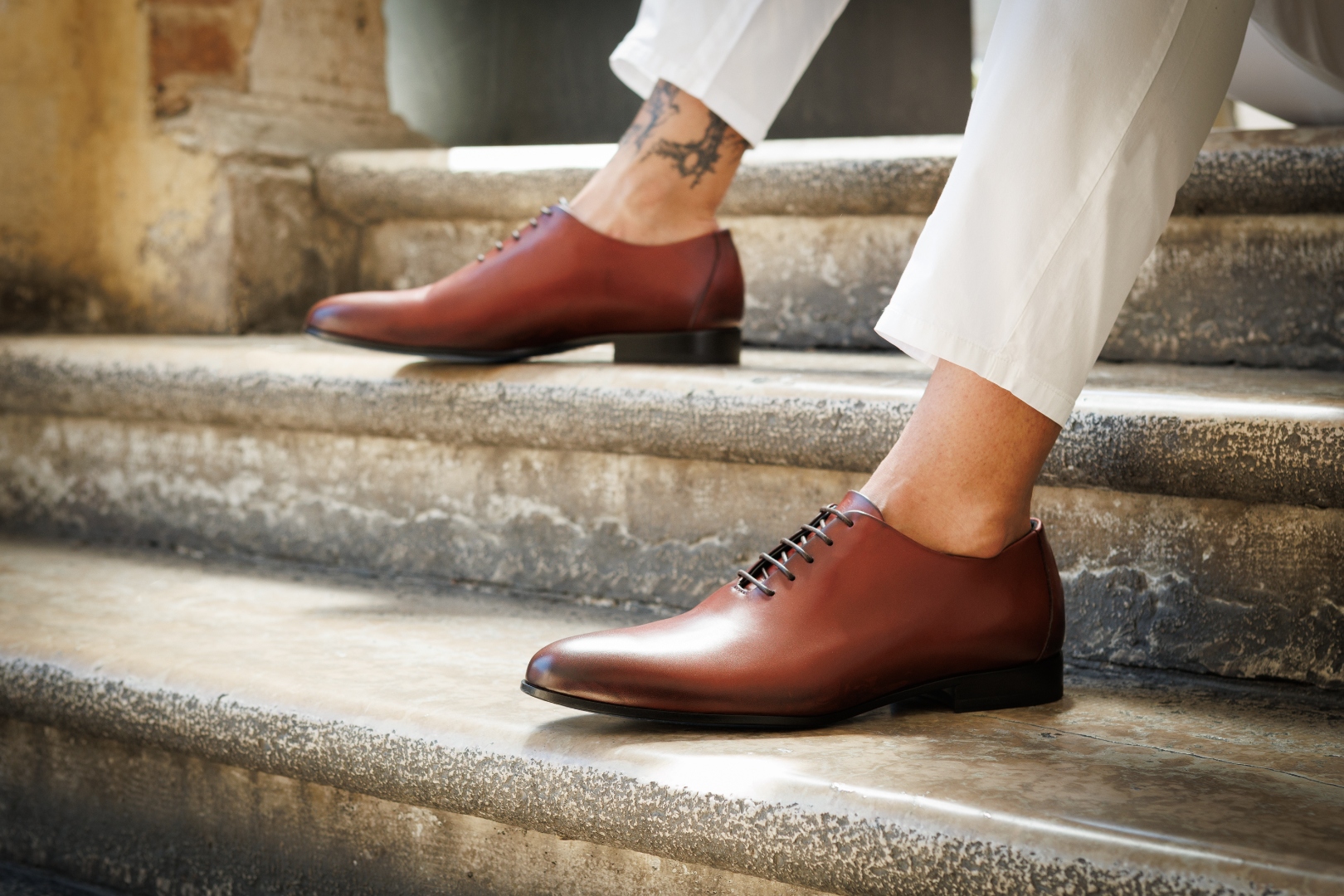
A pair of well-made shoes is not a disposable purchase. Built properly, from genuine top grain Italian leather, a pair can outlast most of what hangs in a man's closet, provided it is cared for with the same attention that went into making it. The irony is that most men who invest in fine footwear never learn the handful of simple habits that separate a shoe worn for two years from one worn for twenty. This guide covers exactly that.
Why Leather Care Matters More Than People Think
Leather is not plastic. It is an organic material that continues to breathe, flex, and respond to its environment long after it leaves the tannery. Every time you wear a pair of leather shoes, the material absorbs moisture from your foot, flexes at the crease points, and gradually loses the natural oils that keep it supple. Left unaddressed, that leather will eventually dry out, crack, and lose the very qualities that made it worth buying in the first place. The good news: a small amount of consistent care prevents almost all of this.
Daily and Weekly Habits
Use a Shoe Horn
This is the single most overlooked habit in leather shoe care. Forcing your heel into a shoe without a horn crushes the heel counter and stretches the stitching at the back seam, the fastest way to shorten a shoe's structural life. Keep a shoe horn by your door and use it every time.
Rest Your Shoes Between Wears
Leather needs roughly 24 to 48 hours to fully release the moisture absorbed during a day of wear. Avoid wearing the same pair two days in a row. Rotating between at least two pairs, a habit worth building around any Nunzio Orsini Oxford you own, dramatically extends the life of both.
Brush After Every Wear
A quick pass with a soft horsehair brush removes surface dust and street grime before it has a chance to settle into the grain. This takes under a minute and should become as automatic as untying your laces.
Cleaning: Removing Dirt Without Damaging the Grain
Before conditioning or polishing, leather must be clean. Use a horsehair brush or a slightly damp, soft cloth to remove surface dirt, working in the direction of the grain rather than against it. For deeper cleaning, a dedicated leather cleaner applied with a soft cloth in small circular motions lifts embedded grime without stripping the leather's natural finish. Avoid household soaps, saddle soap used too aggressively, or anything containing alcohol, all of which can dry the leather out or dull its color.
Conditioning: Replacing What Wear Removes
Conditioning is the step most owners skip, and the one that matters most over the long term. A quality leather conditioner or cream replenishes the natural oils lost through wear and exposure, keeping the material supple and resistant to cracking. For shoes worn regularly, condition every four to six weeks; for shoes worn occasionally, every two to three months is sufficient. Apply a small amount with a soft cloth, work it in gently, and allow it to absorb for several minutes before buffing away any excess. Over-conditioning is possible, the goal is subtle replenishment, not saturation.
Polishing: Protection and Shine
Polish serves two purposes: it restores shine and it forms a light protective layer against moisture and scuffing. Choose a cream or wax polish matched closely to your shoe's color, for a Nunzio Orsini pair in maroon or dark blue, a color-matched cream polish will restore depth without leaving a chalky residue. Apply in thin layers with a soft cloth or brush, allow each layer to dry briefly, then buff to the desired shine with a clean cloth or polishing brush. Once every one to two weeks for regularly worn shoes is a reasonable rhythm.
Polish protects. Conditioner nourishes. Both are necessary, and neither replaces the other.
Cedar Shoe Trees: Non-Negotiable
If there is one accessory worth owning alongside any serious pair of leather shoes, it is a set of cedar shoe trees. Inserted immediately after each wear, cedar trees perform three jobs at once: they absorb residual moisture from the interior, help the leather dry back into its original shape rather than the creased shape of your foot mid-stride, and release a mild natural fragrance that keeps the interior fresh. Cheap plastic or wire trees do none of this, cedar's absorbent, aromatic qualities are the reason it remains the standard nearly a century after shoe trees became common practice.
Storage
Store shoes upright, with trees inserted, away from direct sunlight and heat sources such as radiators or car trunks in summer, both of which dry leather far faster than normal wear ever would. A breathable dust bag or the original shoebox with ventilation is ideal; airtight plastic containers trap moisture and encourage mold. If shoes get caught in rain or snow, never dry them near direct heat. Stuff them with paper to absorb moisture and let them dry slowly at room temperature.
What to Avoid
- Direct heat sources, radiators, heating vents, and direct sun dry out and crack leather.
- Wearing the same pair daily, leather needs recovery time between wears.
- Skipping shoe trees, without them, creasing sets permanently into the leather.
- Harsh household cleaners, anything with alcohol or bleach will strip natural oils and finish.
- Ignoring the soles, leather soles benefit from occasional conditioning too, and worn heels should be replaced before they affect the shoe's structure.
The Long-Term Payoff
None of this takes more than a few minutes a week, yet the difference compounds dramatically over years. A pair of top grain Italian leather Oxfords, cared for properly, will often outlast shoes costing several times as much but neglected from day one. Every pair of Nunzio Orsini shoes, The Francesco, The Daniele, The Giuseppe, or the limited edition Nunzio, is built to reward exactly this kind of attention, developing a richer patina and more personal character the longer you own it.