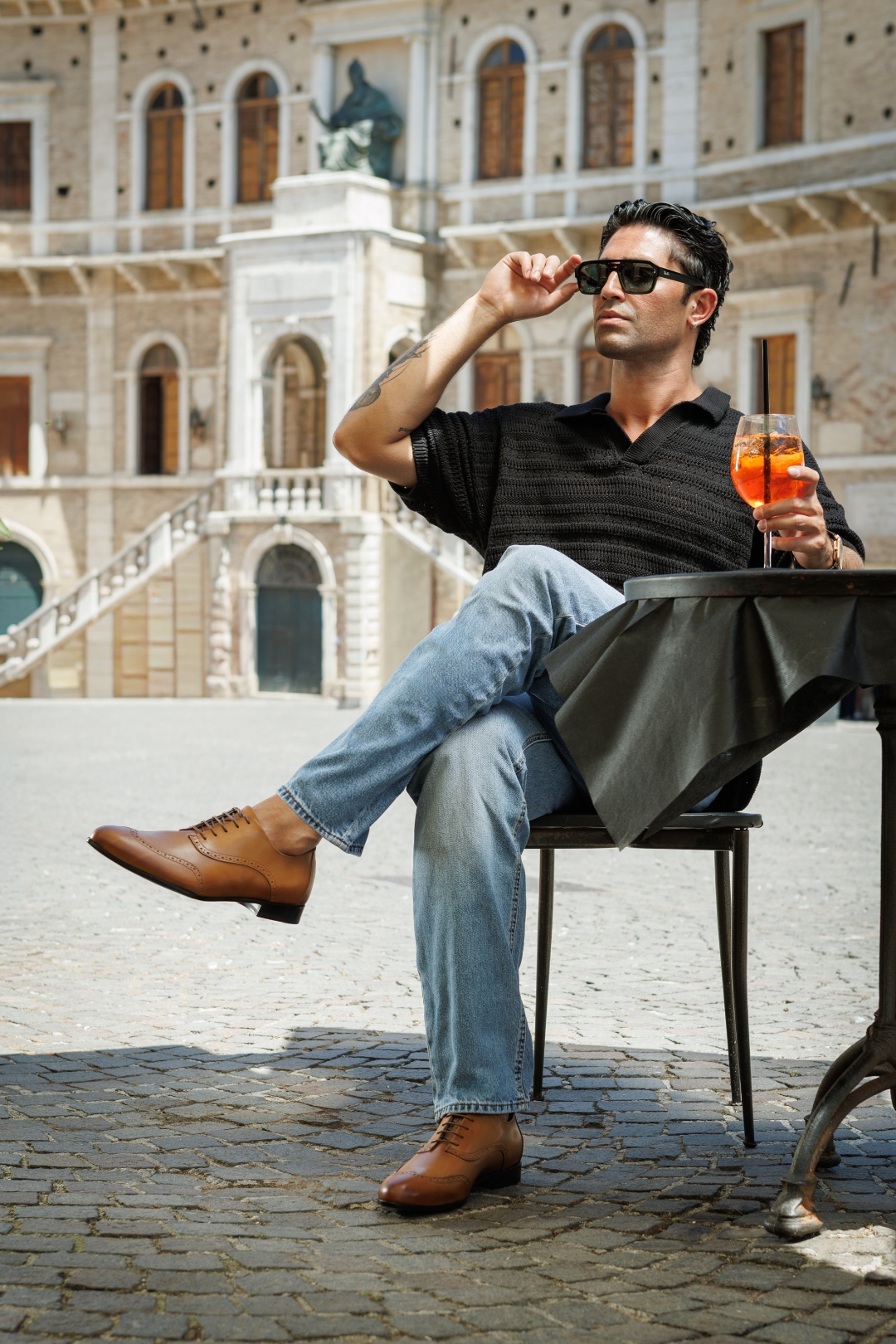
Of all the questions men ask when building a proper dress shoe collection, few come up more often than this one: what's the actual difference between an Oxford and a Derby? The two styles look similar at a glance, both are lace-up leather dress shoes, but the distinction between them is one of the oldest and most important in menswear, and understanding it will change how you think about formality, occasion, and what belongs in your closet.
The Structural Difference: Closed Lacing vs Open Lacing
The difference between an Oxford and a Derby comes down to a single construction detail: how the lacing panels, called quarters, attach to the vamp, the front part of the shoe covering the top of the foot.
Oxford: Closed Lacing
On an Oxford, the quarters are stitched underneath the vamp, meeting at a closed, V-shaped seam. This is called closed lacing. Because the eyelet tabs are sewn beneath the vamp rather than on top of it, the shoe presents a sleeker, more streamlined profile when laced, the vamp appears as one uninterrupted plane of leather.
Derby: Open Lacing
On a Derby, the quarters are stitched on top of the vamp, with the eyelet tabs sitting as separate flaps that can spread open. This is called open lacing. The Derby's construction is more visually casual and, practically speaking, more accommodating, the open throat allows for a wider range of foot shapes and higher insteps.
Closed lacing sits flush and formal. Open lacing sits looser and more relaxed. That single seam decides everything else.
Which Is More Formal?
The Oxford is, without exception, the more formal of the two. Its closed, streamlined construction has made it the standard for black tie, business formal, and any occasion demanding maximum polish. The Derby, with its open lacing and slightly bulkier profile, sits a notch below, appropriate for business casual, smart-casual settings, and situations where an Oxford would feel overly precise.
| Feature | Oxford | Derby |
|---|---|---|
| Lacing style | Closed (quarters stitched under vamp) | Open (quarters stitched over vamp) |
| Formality | Most formal dress shoe | Smart-casual to business casual |
| Silhouette | Sleek, streamlined, low profile | Slightly fuller, more relaxed |
| Best occasions | Black tie, boardrooms, weddings, formal business | Business casual, everyday tailoring, weekend smart-casual |
| Fit flexibility | Precise, tailored fit | More forgiving for higher insteps |
When to Wear Each
The clearest way to decide is to think about the formality of the occasion itself.
- Choose an Oxford for: black tie events, important client meetings, weddings, interviews, and any situation where you want your footwear to read as deliberate, polished, and precise.
- Choose a Derby for: business casual offices, smart-casual dinners, everyday tailoring paired with chinos or a sport coat, and situations calling for a slightly more relaxed silhouette without sacrificing quality leather craftsmanship.
A useful rule many well-dressed men follow: when formality is in question, the Oxford is almost never the wrong choice, while the Derby is the more versatile, everyday option for men who want a refined look with a touch more ease.
Where Nunzio Orsini Fits In
At Nunzio Orsini, we build exclusively within the Oxford family, deliberately. Every shoe in our collection, from The Francesco whole-cut to The Daniele vamp-seam Oxford, The Giuseppe wingtip, and our limited-edition dark blue Nunzio, is constructed with the closed lacing that defines true Oxford formality. This is a purposeful choice: we wanted our collection to represent the highest tier of what a dress shoe can be, built from top grain Italian leather in Marche, Italy, using modern handmade construction that honors traditional technique without unnecessary compromise.
Within that Oxford family, the four styles still offer real range. The whole-cut Francesco is the most minimal and formal; The Daniele's vamp seam adds subtle structure and versatility; The Giuseppe's wingtip brogue detailing softens formality just enough for smart business wear; and The Nunzio, our dark blue signature piece, brings a quiet distinctiveness to the most formal silhouette in the group.
The Bottom Line
An Oxford and a Derby may look similar from across the room, but the seam that joins the quarters to the vamp tells you everything about how, and where, a shoe should be worn. If your wardrobe calls for the most formal, most polished dress shoe available, the Oxford remains the definitive choice, and it's the reason it's the only construction you'll find in the Nunzio Orsini collection.